
Event reflections compiled collaboratively by TIAN, Globe Art Point, Think Africa, and Catalysti
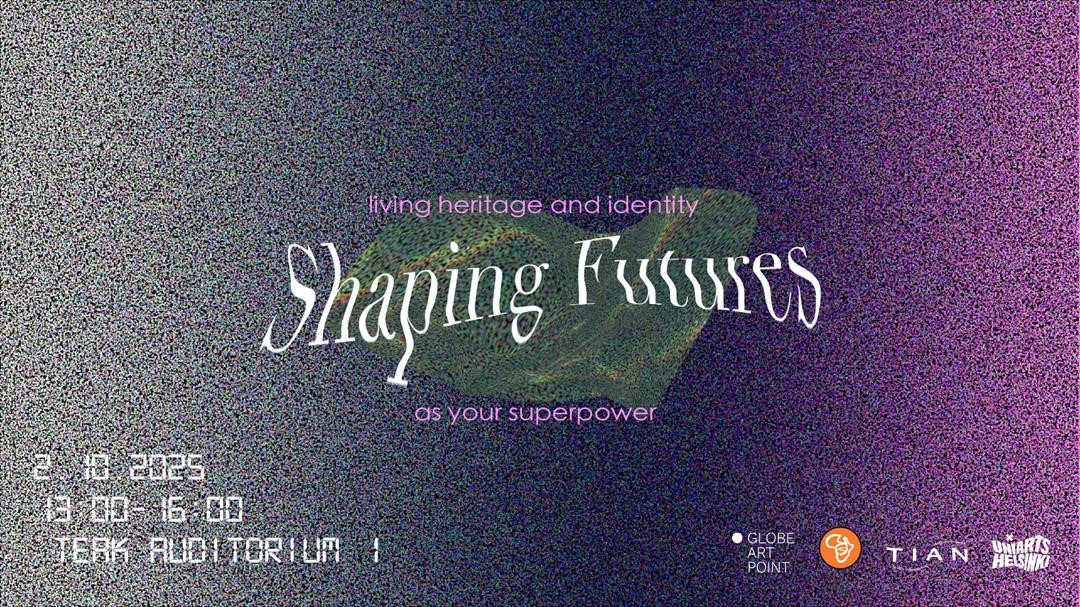
The Shaping Futures event on 2nd October 2025 brought together artists, cultural workers, policymakers, and community organisers to explore living heritage, identity, structural realities, and the role of creativity in shaping the societies we want to inhabit. What emerged was a multifaceted reflection on art, belonging, precarity, possibility, and the importance of shared spaces where diverse experiences can meet. Below, we bring together the perspectives of several partners and contributors who shaped and witnessed the day.
Bringing Multiple Realities into One Room
Gesa, co-organizer and TIAN coordinator, emphasized the value of uniting perspectives that usually remain separated: legal structures, cultural production, lived realities, and future imaginaries. The event gathered experts from very different “corners” of society:
- Johannes Hirvelä (Migri) offering clarity on navigating Finland’s administrative systems,
- Dr. Camila Ribeiro Rosa expanding the discussion toward geopolitical imaginaries and the philosophy of future-making,
- Leena Marsio (Museovirasto) highlighting the role of intangible heritage across cultures,
- Artist-activist Hanna Kosonen sharing insight from the frontlines of resisting cultural cuts,
- Artist and Catalysti board member Özgü Gündeslioglu, whose poetic reflection on clay as a metaphor for shaping futures deeply resonated with the audience.
Together, these voices revealed that cultures are shaped by what is allowed to be expressed and by who is allowed to contribute.
Moderator Liz Ndegwa guided the day with energy and intention, reminding participants that shaping the future is not a distant adventure, but a process lived in the now.
Art as a Guide Through Challenge and Possibility:
Liz’s reflection reiterated a central theme: opportunity and challenge walk hand in hand. Art reveals the extraordinary within ordinary life, grounding us in the present while pointing simultaneously toward the past and the future. Even in an era of budget cuts, precarity, and shifting resources, art persists as a tool for understanding the world and re-imagining how we move forward.
One of the event’s guiding questions: How do we teach future generations the value of art? Was echoed across speakers. Art does not require an audience to be worthy; it exists as a continuous force, shaping futures regardless of recognition.
Art as Resistance, Voice, and Responsibility
From Globe Art Point’s perspective, the event underscored how crucial artists are in moments of cultural and political uncertainty. As Ann (GAP) reflected, Finnish artists, especially now, amid funding cuts, hold a powerful opportunity to claim visibility and use their work as a form of protest, advocacy, and social resilience. Creativity is both a personal expression and a collective responsibility. When artists let their heritage and identity shine, they reshape cultural narratives and strengthen the very fabric of society.
In light of the ongoing debates about cultural funding and support, Globe Art Point’s mission is to encourage artists to remain visible, vocal, and vibrant. By embracing their unique heritage and experiences, artists can help ensure that creativity continues to thrive and influence society positively.
Creating Breathing Space Amid Precarity
Dr. Camila Ribeiro Rosa offered a strikingly honest perspective: in today’s political climate, especially for non-Finnish-born artists and those without EU citizenship, “good news” is painfully rare. Precarity multiplies when legal status intersects with artistic labour, often silencing or sidelining migrant creatives.
For Camila, Shaping Futures became a space of breathing, of interrupting negative narratives and imagining solidarity instead of competition. In this space, the category of “artist” stretched beyond its usual borders, allowing Finnish and migrant artists alike to stand together against scripts of “us vs. them.”
Toward Ongoing Exchange
Across all reflections, a shared wish emerged:
that the conversations sparked at Shaping Futures continue beyond the event itself.
The convergence of structural knowledge, artistic expression, cultural memory, and geopolitical critique created a rare moment of synchronicity. The audience’s questions, the speakers’ diverse perspectives, and the metaphor of clay: soft, malleable, shaped by many hands, became symbols of a future built collaboratively.
The event planted seeds of continued exchange, collective imagination, and shared responsibility for the cultural landscapes we hope to build.